Where to Stay in Sultanahmet: Best Streets, Hotels and What to Avoid
I have walked visitors from the tram stop to their hotel in Sultanahmet more times than I can count, and I have watched the same expression cross their face every single time. They come up the steps at Sultanahmet station, turn left, and there it is Hagia Sophia, enormous and rose-coloured and fifteen hundred years old, sitting at the end of the street like it has always been waiting.
That moment is the reason to stay in Sultanahmet.
But here is what I also see, usually around day two: the same visitors looking slightly hunted, having eaten three mediocre meals in a row at restaurants with photographic menus, having been approached by the same carpet seller twice, having climbed a hill they didn’t know was there while dragging a suitcase over cobblestones.
Sultanahmet is the most rewarding neighbourhood in Istanbul to stay in and the easiest one to get wrong. The difference is almost entirely about which street you book on. Three hundred metres in this neighbourhood is the difference between a quiet cobbled lane with a rooftop view of the Blue Mosque and a coach-parking thoroughfare where you’ll be woken at six.
So let me give you the street-level version.
The short answer
If you want the quick version before the detail:
Best for first-timers: Küçük Ayasofya, quiet, beautiful, ten minutes walk to everything, and the streets feel residential rather than commercial.
Best for transport: Sirkeci, slightly outside the historic core, on the tram and the Marmaray, and noticeably better value.
Best for atmosphere: Cankurtaran, the streets sloping down towards the sea, with the Marmara on one side and the old city walls on the other.
Best for a view: anywhere on the ridge behind the Blue Mosque, where the rooftop terraces look out over both the mosque and the water. Ask for a terrace and a high floor.
Where I’d avoid: the immediate stretch of Divanyolu between the tram stop and the Grand Bazaar. It’s convenient and it’s loud, and you’re paying a premium for the noise.
Where Sultanahmet actually is
Sultanahmet is not really a neighbourhood in the administrative sense. It’s the name everyone uses for the tip of the historic peninsula, the ancient triangle of land where the Golden Horn meets the Sea of Marmara, surrounded on two sides by water and on the third by the remains of Byzantine walls. Officially it sits inside the larger district of Fatih. Locally, nobody calls it that.
What matters practically is that it’s small. From Hagia Sophia to the sea is a fifteen-minute walk downhill. From Hagia Sophia to the Grand Bazaar is twelve minutes. Topkapı Palace, the Blue Mosque, the Basilica Cistern, the Hippodrome, the Archaeological Museum and Gülhane Park are all inside a circle you could walk across in twenty minutes.
That density is genuinely rare. In most cities the great sights are scattered and you spend your holiday on public transport. Here you can see three world-class monuments before lunch and walk back to your room for a nap. If you have two or three days in Istanbul, that convenience is worth a great deal.
The trade-off is equally real, and I’ll come to it.
The honest case for staying in Sultanahmet
You wake up inside the history: There is something specific about stepping out of a doorway at seven in the morning, before the tour groups, when the light is low and the seagulls are loud and the Blue Mosque courtyard is nearly empty. You only get that if you sleep here. Day-trippers arrive at ten, by which time the moment has passed.
Everything is walkable: No metro connections, no working out which tram line, no forty-minute journeys. You will save hours across a short trip, and hours are the thing you have least of.
The call to prayer: From a rooftop in Sultanahmet you hear it echoing between the Blue Mosque and Hagia Sophia and then rolling out across the water. It is one of the great sounds of the world and it is free.
Good value at the top end: Because so much of Sultanahmet’s stock is small, family-run and old, you can often get a genuinely characterful room, Ottoman timber, vaulted brick ceilings, a terrace for less than a bland international chain would cost you in Beyoğlu.
The honest case against
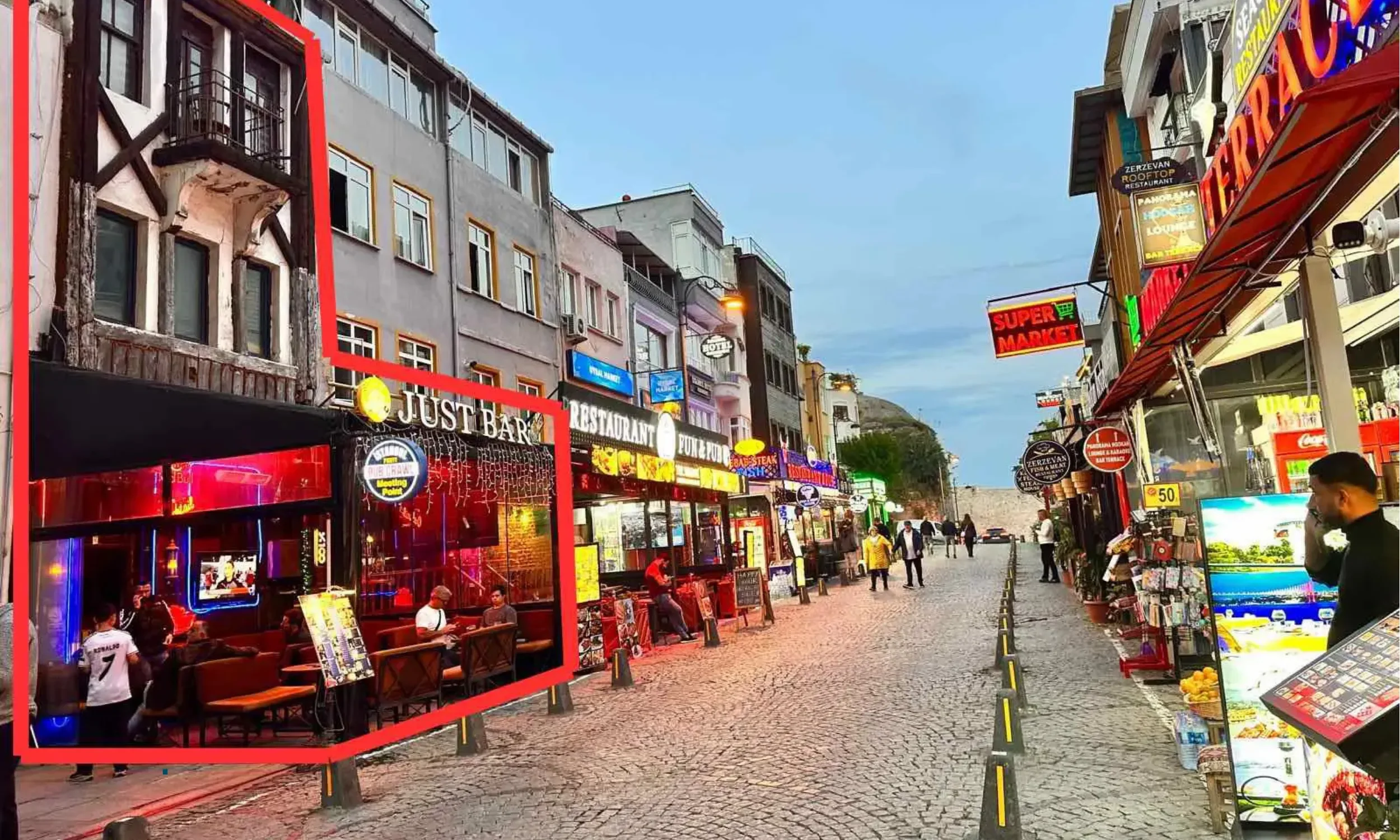
The food: This is the real problem. The restaurants in the tourist core are, with a handful of exceptions, mediocre and expensive. Any restaurant with a photographic menu, a man outside inviting you in, and eight cuisines listed on the board is not where anyone from Istanbul eats. You will need to walk to eat well towards Kumkapı, up to Beyazıt, or across the water entirely.
The evenings are quiet: Not peaceful-quiet, empty-quiet. Once the day-trippers leave around seven, much of Sultanahmet shuts down. If your idea of a good trip involves bars, late dinners and a walk home past people, you’ll be happier in Karaköy or Kadıköy.
It is relentlessly touristic: You will be approached. Not aggressively, and not dangerously, but persistently. Carpet shops, restaurant touts, the occasional shoeshine routine. It’s tiring by day three.
The hills and the cobbles: Sultanahmet slopes. Some streets slope severely. Suitcases with small wheels do badly here.
Sultanahmet street by street
This is the part that actually matters. Book the right street and every complaint above softens.
Küçük Ayasofya: my first recommendation
South-west of the Blue Mosque, sloping gently down towards the Marmara, Küçük Ayasofya is named for the small sixth-century church of Saints Sergius and Bacchus that sits at its heart. It’s a genuinely quiet, low-rise, residential-feeling pocket of narrow streets, antique shops, small cafés and cats asleep on doorsteps.
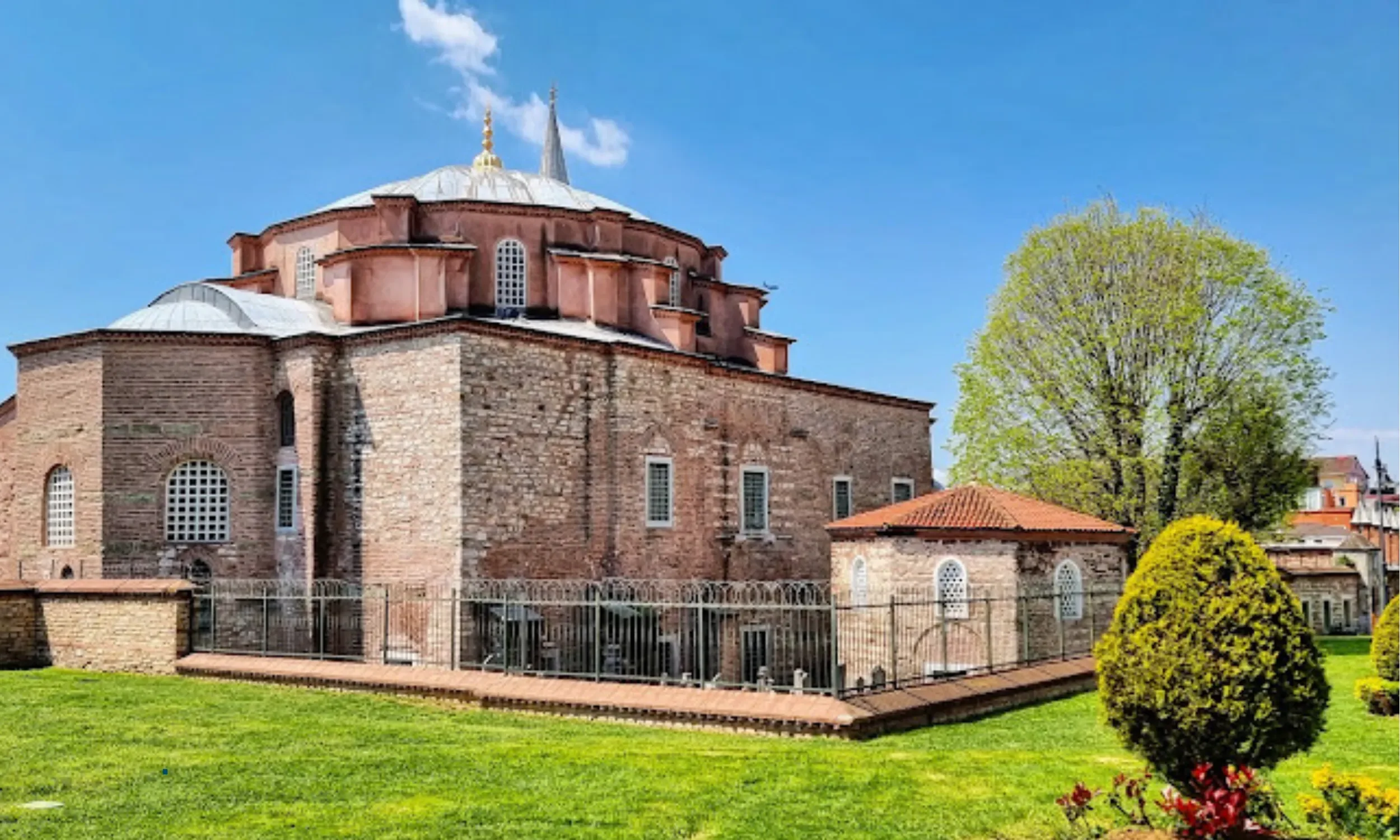
You are eight minutes’ walk from the Blue Mosque and twelve from Hagia Sophia, but the tour coaches never come down here. Rooms are cheaper than the equivalent two streets north. Several of the small hotels have rooftop terraces looking straight back at the Blue Mosque domes.
If a friend asked me for one word on where to book in Sultanahmet, this would be it.
Cankurtaran: for the sea and the sunsets
Below Topkapı, running down towards the coastal road and the Marmara, Cankurtaran is where the old city meets the water. The streets are steep and lined with small guesthouses, and the reward is that many of the upper rooms look out over the Sea of Marmara and the shipping lanes towards the Princes’ Islands.
It’s five minutes further from the main sights than Küçük Ayasofya, which nobody notices. The sunsets over the water from a Cankurtaran terrace are among the best in the city. It’s also the closest part of Sultanahmet to the Marmaray station at Sirkeci if you want to reach the Asian side quickly.
Bring shoes you can walk hills in.
Sirkeci: the value pick
Sirkeci sits north of Sultanahmet proper, down towards the Golden Horn and the Galata Bridge. Purists will tell you it isn’t Sultanahmet. Practically, it’s a twelve-minute walk to Hagia Sophia, it’s on the T1 tram, it’s on the Marmaray line, and it’s a short walk from Eminönü’s ferry piers.
Rooms here run noticeably cheaper than in the historic core for the same standard. The area is more workaday, offices, shops, actual Istanbul life, which some travellers find refreshing and others find less romantic. If you’re on a budget, or you plan to move around the city rather than staying in the old town, Sirkeci is the smart booking.
Binbirdirek and the Hippodrome edge
The streets west of the Hippodrome, around the Binbirdirek cistern, are a compromise: very central, quieter than Divanyolu, and with some lovely restored Ottoman houses converted into small hotels. You’re two minutes from the Blue Mosque. It’s more expensive than Küçük Ayasofya for a broadly similar experience, but if being right there matters to you, this is where to pay for it.
Where I’d think twice
Divanyolu itself. The main road from the tram stop towards Beyazıt is the spine of tourist Sultanahmet. It has the tram running along it, coaches idling on it, and a solid wall of souvenir shops and interchangeable restaurants. Hotels here charge for the location and deliver the noise. If your window faces this street, you will hear it.
The blocks immediately behind the Grand Bazaar. Convenient for shopping, dead in the evening, and the streets are chaotic with delivery traffic until late.
Anything advertised as “Sultanahmet” that’s actually in Aksaray or Laleli. Check the map pin, not the listing title. Laleli is a wholesale textile district roughly twenty-five minutes’ walk from Hagia Sophia, and it is not what you’re imagining.
What to actually look for when booking
After the street, these are the things that make the difference between a good Sultanahmet stay and an irritating one.
A rooftop terrace: This is the single highest-value feature in this neighbourhood, and it’s common. Breakfast on a roof looking at Hagia Sophia is a memory; breakfast in a windowless basement is not. Check the photos and confirm the terrace is actually open to guests and not just a marketing image.
Which way the room faces: Ask directly. A room facing an internal courtyard will be quiet. A room facing Divanyolu or a coach route will not. Most small hotels will tell you honestly if you email and ask.
A lift: Many Sultanahmet buildings are old, narrow and four or five storeys with no lift. If you have a heavy case, a knee that complains, or you’re travelling with a child, this is not a small detail. Confirm it.
How far the taxi can actually get: Several of the loveliest streets are pedestrianised or too narrow for cars. That’s charming until you arrive at midnight with luggage. Ask the hotel for the nearest drop-off point before you fly.
Breakfast: Turkish breakfast is one of the country’s great pleasures and most small hotels here do a proper one, cheeses, olives, tomato, cucumber, honey, jam, eggs, endless tea. A hotel that serves a real Turkish breakfast is saving you money and giving you a better morning. A hotel serving packaged croissants is telling you something.
The call to prayer: The dawn call, around 5am in summer, is genuinely loud if you’re close to a mosque. Most people find it magical for two nights and tiring by the fourth. Light sleepers should either bring earplugs or book slightly further out Cankurtaran and Sirkeci are gentler.
What it costs
Prices in Istanbul move quickly, so treat these as ranges rather than quotes, and check the live rates on the map above.
Budget guesthouses and hostels: in Küçük Ayasofya and Cankurtaran typically start low and include breakfast, often in a small family-run building with eight or ten rooms.
Mid-range boutique hotels: restored Ottoman houses, a terrace, decent bathrooms occupy the broad middle of the market and are where Sultanahmet offers the best value relative to European cities.
High-end: in Sultanahmet means either a historic conversion with serious character or a large international property near Gülhane. Note that at the very top end, the best hotels in Istanbul are mostly not in Sultanahmet, they’re along the Bosphorus in Beşiktaş and Ortaköy. If luxury matters more to you than walking convenience, look there instead.
Booking timing: Istanbul’s peak is April–June and September–October. Book six to eight weeks ahead for those months. July and August are hot and slightly cheaper. Winter is genuinely good value and the city is beautiful in the rain, if you don’t mind grey.
Sultanahmet compared to the alternatives
My honest recommendation: if it’s your first visit and you have three days or fewer, stay in Sultanahmet. The walking convenience outweighs everything. If you have five days or more, split it — two nights in Sultanahmet for the monuments, then move to Karaköy or Kadıköy to see how the city actually lives. Moving hotels mid-trip sounds like a hassle and takes forty minutes.
Practical things nobody mentions
Getting there from the airport. From Istanbul Airport (IST), the cheapest route is the M11 metro to Gayrettepe, M2 to Yenikapı, then the T1 tram to Sultanahmet, around 75–85 minutes and a few euros with an İstanbulkart. The Havaist bus to Aksaray plus a tram is simpler with luggage. A taxi will take 50–70 minutes and cost many times more. Buy your İstanbulkart at the airport machines before you leave the terminal.
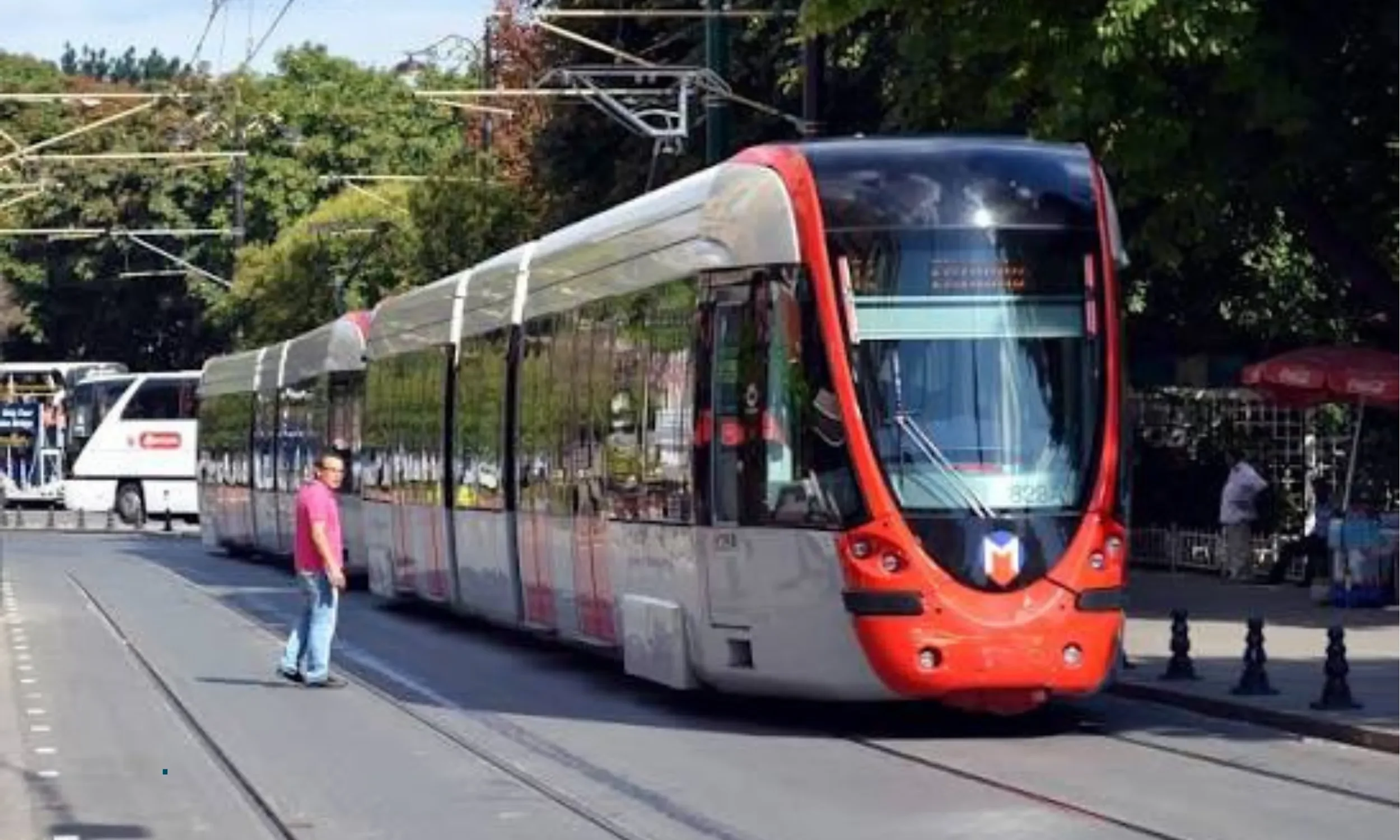
The tram is your friend. The T1 runs right through Sultanahmet and connects you to the Grand Bazaar, Eminönü’s ferries, and across the Galata Bridge to Karaköy. It’s the single most useful line in the city for visitors.
Cash and cards. Cards work almost everywhere. Keep some small notes for the simit sellers, the tea, and the mosque shoe-bag donations.
Mosque timings. The Blue Mosque and other working mosques close to visitors during prayer times and for around ninety minutes at midday on Fridays. Plan around it or you’ll queue twice.
Shoes. I know I’ve said it three times. Cobblestones, hills, and roughly fifteen thousand steps a day. Wear the boring shoes.
Frequently asked questions
Is Sultanahmet a good area to stay in Istanbul?
Yes, particularly for a first visit or a short trip. You’re within walking distance of Hagia Sophia, the Blue Mosque, Topkapı Palace and the Basilica Cistern, which saves significant time. The trade-offs are weaker restaurants and quiet evenings.
Is Sultanahmet safe at night?
Sultanahmet is one of the more heavily policed and well-lit parts of Istanbul, and walking back to your hotel in the evening is normal and unremarkable. It’s simply quiet after around eight. Standard city awareness applies, as anywhere.
How many days do you need in Sultanahmet?
Two full days covers the major sights without rushing. Three lets you add the Archaeological Museum, Gülhane Park and a slower morning at Topkapı.
Sultanahmet or Taksim which is better?
Sultanahmet for sightseeing and history; Taksim for nightlife, shopping and restaurants. First-time visitors on short trips are almost always happier in Sultanahmet.
Can you walk from Sultanahmet to the Grand Bazaar?
Yes, around twelve minutes uphill along Divanyolu, or a couple of stops on the T1 tram.
Is it worth paying more for a Blue Mosque view?
Sometimes. A terrace view that everyone can use is worth more than a room view you’ll look at for ten minutes a day. Prioritise the terrace.
Planning the rest of your trip? Read my 3-day Istanbul itinerary, my guide to getting from the airport into the city, and the Istanbul street food guide so you don’t end up eating on Divanyolu.
Travelling with children? Sultanahmet is wonderful for kids and also a lot of walking past old buildings they don’t yet have a reason to care about. My Istanbul Coloring Book for Kids gives them one they colour the domes and the ferries and the cats before they see them, and then spend the trip recognising things.
Some links in this article are affiliate links. If you book through them I earn a small commission at no extra cost to you, it’s what keeps this site running.