
Digital Nomad Visa: The Complete Guide to Living and Working Abroad Legally
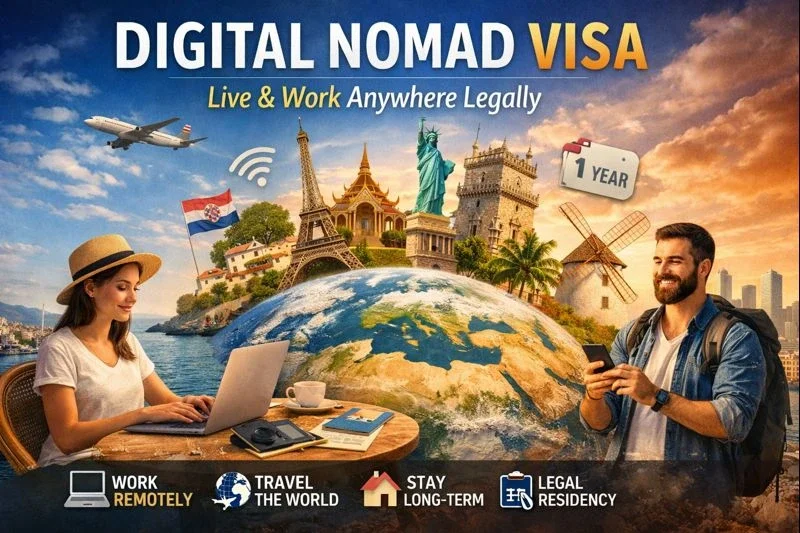
In recent years, the way we work has changed dramatically. Remote work is no longer a privilege reserved for a few—it has become a global movement. As laptops replace office desks and Wi-Fi becomes more valuable than a fixed address, governments around the world have adapted to this shift by introducing a new type of residency permit: the Digital Nomad Visa.
Designed for remote workers, freelancers, and online entrepreneurs, the digital nomad visa allows individuals to live in a foreign country while working legally for employers or clients based elsewhere. This article offers a comprehensive guide to digital nomad visas, explaining what they are, how they work, who qualifies, and which countries offer them.
What Is a Digital Nomad Visa?
A digital nomad visa is a legal permit that allows foreign nationals to reside in a country while working remotely for companies or clients located outside that country. Unlike tourist visas, which often prohibit work activities, digital nomad visas explicitly allow remote employment under specific conditions.
These visas are typically valid for 6 months to 2 years, depending on the country, and in many cases can be renewed. They bridge the gap between short-term tourism and permanent residency, offering flexibility without requiring long-term immigration commitments.
Why Digital Nomad Visas Exist
Governments introduced digital nomad visas for several strategic reasons:
Economic stimulation
Digital nomads spend money on housing, food, transportation, and local services without taking local jobs.Tourism diversification
Instead of short visits, nomads stay longer, supporting local economies year-round.Global talent attraction
Some countries view digital nomads as potential future residents, investors, or entrepreneurs.Adaptation to remote work trends
With millions of people working online, countries recognized the need for legal frameworks.
Who Is Eligible for a Digital Nomad Visa?
While requirements vary by country, most digital nomad visas are designed for:
Remote employees working for foreign companies
Freelancers with international clients
Self-employed entrepreneurs operating online businesses
Consultants, designers, developers, writers, marketers, and similar professions
Common Eligibility Requirements
Most countries ask applicants to provide:
Proof of remote work or self-employment
Minimum monthly or annual income (usually €1,000–€5,000/month)
Valid health insurance
Clean criminal record
Valid passport
Proof of accommodation
Importantly, digital nomads cannot work for local employers unless they change visa status.
Benefits of a Digital Nomad Visa
1. Legal Right to Work Remotely
Digital nomad visas eliminate the legal gray area of working on a tourist visa.
2. Longer Stays
Instead of 30–90 days, you can stay for months or years.
3. Access to Services
Visa holders can often open bank accounts, rent apartments, and access healthcare.
4. Cultural Immersion
Living longer allows deeper cultural experiences than short-term travel.
5. Tax Advantages (in Some Countries)
Some visas offer partial or full tax exemptions on foreign income.
Digital Nomad Visa vs Tourist Visa
Feature Tourist Visa Digital Nomad Visa,
Work Allowed ❌ No ✅ Yes (remote only)
Length of Stay Short-term Medium to long-term
Legal Protection Limited Full legal residency
Tax Benefits None Possible exemptions
Access to Services Limited Expanded
Popular Countries Offering Digital Nomad Visas
1. Portugal
Portugal is one of the most popular destinations for digital nomads thanks to its climate, safety, and cost of living.
Income requirement: Moderate
Visa length: 1–2 years
Renewal option: Yes
Path to residency: Yes
2. Spain
Spain offers a digital nomad visa aimed at remote professionals and freelancers.
Tax incentives available
Strong infrastructure
Ideal for EU access
3. Estonia
Estonia was one of the first countries to introduce a digital nomad visa.
Tech-friendly environment
Clear legal structure
Excellent e-residency ecosystem
4. Croatia
Croatia’s digital nomad visa allows up to one year of residency.
No local income tax on foreign earnings
Stunning coastline
Affordable living
5. Thailand
Thailand has introduced long-term visas for remote professionals.
Strong expat communities
Low cost of living
Excellent quality of life
6. Mexico
While not officially branded as a “digital nomad visa,” Mexico’s temporary residency visa is widely used by nomads.
Easy application process
Long stays
Rich culture and affordability
Income Requirements Explained
Income thresholds exist to ensure digital nomads can support themselves without relying on local welfare systems.
Typical income requirements range from:
$1,000–$2,000/month (developing countries)
$3,000–$5,000/month (EU and high-income countries)
Some countries also allow savings-based proof instead of monthly income.
Tax Considerations for Digital Nomads
Taxes are one of the most complex aspects of digital nomadism.
Key Points to Understand:
Some countries do not tax foreign income
Others require tax registration after a certain stay duration
Tax residency is usually triggered after 183 days
Double taxation treaties may apply
It is strongly recommended to consult a tax professional before applying.
Health Insurance and Medical Coverage
Most digital nomad visas require:
International health insurance
Coverage valid for the entire stay
Emergency and hospitalization coverage
Some countries later allow access to public healthcare after residency registration.
Challenges and Limitations
While digital nomad visas offer many benefits, they also come with challenges:
Application paperwork can be complex
Processing times vary
Income thresholds may be high
Not all professions qualify
Family visas may require additional documentation
Despite these challenges, many nomads find the benefits far outweigh the drawbacks.
Is a Digital Nomad Visa Worth It?
A digital nomad visa is ideal if you:
Want legal certainty
Plan to stay longer than 90 days
Work remotely full-time
Value stability and access to services
It may not be necessary for short-term travelers or those constantly moving every few weeks.
The Future of Digital Nomad Visas
As remote work continues to grow, digital nomad visas are expected to become more common and more flexible. Countries are competing to attract global talent, and future visas may offer:
Easier renewal options
Family-friendly policies
Permanent residency pathways
Improved tax clarity
Digital nomadism is no longer a trend—it is a long-term shift in how people live and work.
The digital nomad visa represents a new chapter in global mobility. It empowers individuals to explore the world without sacrificing career stability, while helping countries attract skilled professionals and economic activity.
For remote workers seeking freedom, flexibility, and legal security, a digital nomad visa can be the gateway to a truly global lifestyle.