Hagia Sophia Visit Guide: Tickets, Tips and What to Expect Inside
There are places in the world that photographs cannot prepare you for. Hagia Sophia is one of them. You can look at a hundred images, read about its dimensions, understand its history, and still, walking through those doors for the first time, the sheer scale and improbable beauty of the place will stop you where you stand.
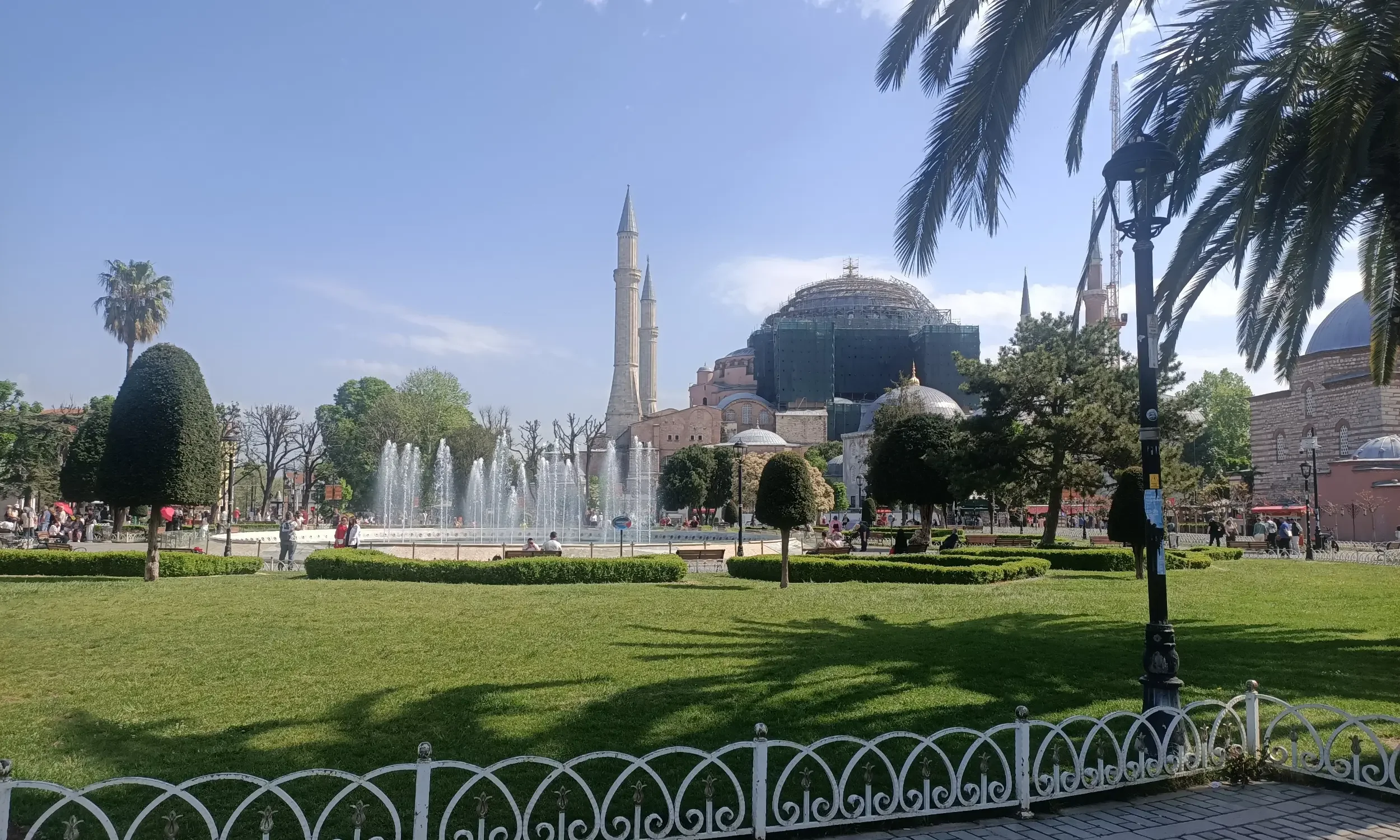
Built by the Byzantine Emperor Justinian I in 537 AD, Hagia Sophia served as the world's largest cathedral for nearly a thousand years. After the Ottoman conquest of Constantinople in 1453, it became a mosque. In 1934 it was converted into a museum, and in 2020 it was returned to active use as a mosque. Today it is both: a functioning house of Muslim worship and one of the most visited tourist sites on earth.
Understanding what Hagia Sophia is what it has been matters before you walk in. It makes every inch of it more meaningful.
Essential Visitor Information
Opening hours Hagia Sophia is open daily for visitors outside of prayer times. In general, visiting hours run from approximately 9:00 AM to 11:00 PM, but the mosque closes to tourists during the five daily prayers (typically 30–45 minutes each time). Friday midday prayer causes the longest closure. Always check the official schedule before visiting, as prayer times shift with the seasons.
Entry fee As of 2025, entry to Hagia Sophia was free for all visitors. However, in 2026 Hagia Sophia is no longer free for general visitors and tourists, the entrance fee for foreign tourists is €25.
Dress code This is non-negotiable and strictly enforced. Both men and women must dress modestly. Women are required to cover their hair, shoulders, and arms. Free headscarves are available at the entrance if you don't have one. Everyone must remove their shoes before entering. Bring a bag to carry them, or use the provided plastic bags. Shorts below the knee are acceptable; very short shorts or skirts are not.
How long to spend Plan for at least 90 minutes to two hours. This is not a building you should rush through. If you're visiting with a guided tour, tours typically run 1.5 hours and cover the main nave, the imperial door, the upper galleries, and the key Byzantine mosaics.
What to See Inside Hagia Sophia
The Main Nave Entering through the Vestibule of the Warriors, you pass through the Imperial Door, an enormous 9th-century portal, and suddenly the full interior opens in front of you. The central dome soars 55 meters overhead, ringed by windows that flood the interior with light in a way that gives the illusion of the dome floating on air. This was intentional, Justinian's architects wanted worshippers to feel the dome was suspended from heaven.
Look up and let your eyes adjust. The scale is simply hard to absorb all at once.
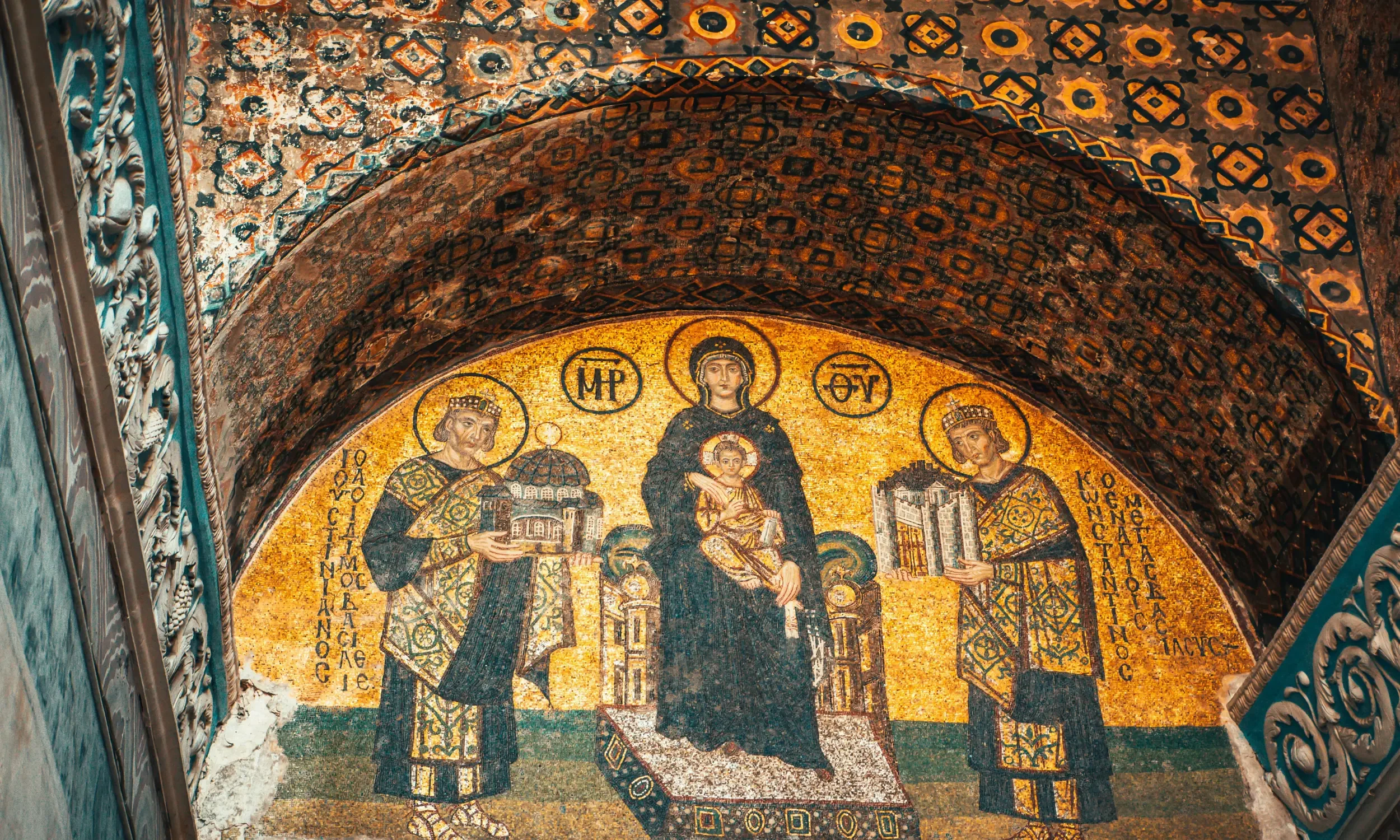
The Byzantine Mosaics Hagia Sophia's mosaics are among the finest surviving examples of Byzantine art. The most famous are in the upper galleries: the Deësis mosaic (Christ flanked by the Virgin Mary and John the Baptist), considered one of the greatest masterpieces of Byzantine craftsmanship, the faces are startlingly realistic for artwork from the 13th century. There is also a mosaic of Emperor Constantine IX and Empress Zoe, with a rather interesting political history: the Emperor's face was recut multiple times as Empress Zoe changed husbands.
Some mosaics are partially covered with cloth during prayer times and may not always be fully visible. Note that the upper galleries require climbing a ramp but the views from above the main nave are stunning.
The Ottoman Additions After the 1453 conquest, Sultan Mehmed II ordered the addition of an Islamic mihrab (prayer niche), a minbar (pulpit), and large calligraphic medallions bearing the names of Allah, the Prophet Muhammad, and the first four caliphs. These 19th-century medallions hang over the nave, they are 7.5 meters in diameter, the largest examples of Islamic calligraphy in the world.
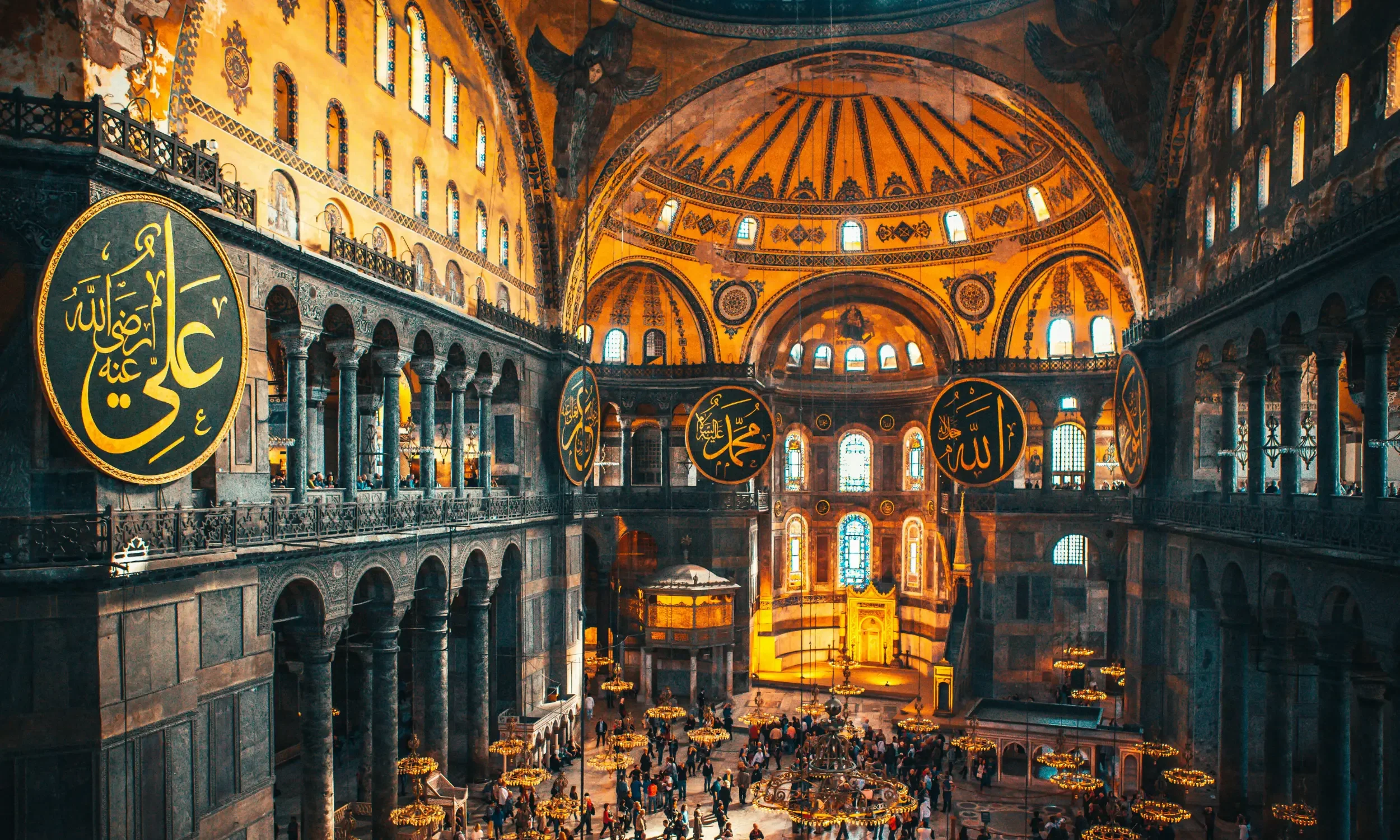
The Ottoman minarets were added at different periods and are visible from outside. From the interior, the minaret views through the windows create a striking juxtaposition of Byzantine and Islamic architecture.
The Weeping Column In the northwest corner of the nave, look for the Column of Saint Gregory the Miracle Worker, a Byzantine column with a copper casing containing a small hole. According to tradition, the column perpetually produces moisture, and touching the hollow brings good fortune. There will be a queue.
Practical Tips for a Better Visit
Go early or go late. The quietest times to visit are right at opening (around 9 AM) or in the evening after 7 PM, when tour groups have thinned out. Midday, particularly in summer, brings very large crowds.
Visit on a non-Friday. Friday midday prayer (Cuma namazı) draws the largest congregation and results in the longest tourist closure of the day.
Buy a combination tour. If you plan to visit Topkapi Palace, the Blue Mosque, and Hagia Sophia in the same trip, booking a guided combination tour is efficient and typically includes skip-the-line access. Find options on the Wayfind Trip services page.
Photography. Photography is allowed in most areas. During prayer times, visitors present in the building should be respectful and quiet. Do not photograph people at prayer.
Arrive on foot if possible. The Sultanahmet area is extremely congested by vehicle. The tram (T1 line, Sultanahmet stop) is the simplest way to arrive.
Hagia Sophia and Its Place in History
For visitors who want deeper context, it is worth knowing a little of what this building has witnessed. It was the site of the coronation of Byzantine emperors. It survived the Fourth Crusade, when Western Christian forces sacked Constantinople and briefly converted it to a Catholic cathedral. It witnessed the fall of one empire and the rise of another. And through all of it, the dome, repaired after earthquakes but fundamentally unchanged, kept standing.
Many visitors describe a strange emotional response inside Hagia Sophia: not quite religious feeling, but something adjacent to it. A recognition that you are standing inside time itself, inside the accumulated weight of human history.
That is not something photographs can convey. It is something you have to feel in person.